Welcome to 8 Bit Horse

8 Bit Horse is a website dedicated exclusively to 2D video games for all systems, old and new.

Lessons in 2D Game Design

We delve into the design lessons learned from classic 2D video games.

Picks of the Decade

Our picks of the most memorable games from the previous decade.

A Celebration of 2D

Our list of notable 2D video games.

Showing posts with label 2014. Show all posts

The Sun and the Moon

A game by Daniel Linssen for PC, Mac, PS4, Vita, and Xbox One, originally released in 2014.
The Sun and the Moon is an abstract puzzle platformer with a simple premise that is permuted upon in every conceivable way across the game’s 150 levels. The game began its life as an entry in the Ludum Dare 29 game jam, and was the winner of that competition. The game lives solely on its mechanics, offering no overarching narrative, a minimal color scheme, and a limited array of visuals that quickly communicate level elements to the player, making most areas very easy to parse.


The player controls a small orb that is able to perform high leaps from platform to platform. The primary dangers lie in coming into contact with spikes or falling off the bottom of the screen, either of which will kill the player instantly. That said, the player is given infinite attempts – as well as a quick restart button should he mess up or find himself in an unwinnable situation – and levels are designed to be completed in mere seconds, even on a first attempt.


Devil's Dare / Streets of Red: Devil’s Dare Deluxe

A game by Secret Base for PC, Mac, Linux, PS4, and Switch, originally released in 2014, with the Devil's Dare Deluxe version released in 2018.
Devil's Dare (悪魔の挑戦), and its updated re-release Streets of Red: Devil’s Dare Deluxe, is a beat ‘em up that offers numerous throwback references to movies, television, video games, and even to the video game industry itself, including a faux “Winners don’t use drugs” splash screen. Some of these references were updated in the Streets of Red Deluxe release, such as the xenomorph from Alien being replaced by the demigorgon from Stranger Things. The story begins with Bitejacker filming an episode on a rooftop at the Benny Arcade Expo, a.k.a. BAX East (get it?), which suddenly becomes overrun by flesh-eating zombies. Four survivors are holed up on a stage, marveling at the wondrous undead cosplayers before realizing that they’re actually eating people.

Suddenly a red fairy named Ivan shows up. Referencing Navi with a shout of “Hey, listen!”, Ivan explains that he is able to give the survivors incredible powers so that they can fight the undead horde, and all he asks in exchange are the souls of the zombies they kill… and they decide to take him up on his offer. (Hey, what could go wrong?) The player is free to select from one of four playable characters, or team up for 4P co-op, and two additional characters are unlocked upon completing the game.


Pix the Cat

A game by Pasta Games for PC, Mac, Linux, Xbox One, PS4, Vita, and Switch, originally released in 2015.
Pix the Cat is an arcade-style action game starring Pix, the big-headed blue cat who got his start in Arkedo Series 03 - Pixel! on Xbox Live Indie Games. Since then, the pixelated puss has visited other platforms via a port of his original game and the release of Pix’n Love Rush on mobile devices. In his first outing, Pix explored a traditional blocky platforming environment designed to mimic LCD-based titles, only with considerably more vibrant visuals. In addition to hopping and bopping on enemies’ heads and unleashing “meow.wav” projectiles, Pix could also enter individual blocks and move around in a zoomed-in world… and this concept carries over into his latest adventure.


Pix the Cat begins with only an Arcade Mode available, although there are three other modes that become available as the player reaches certain thresholds: Laboratory, Nostalgia, and Arena.


Arcade Mode
There is only one level available at the start of the game, in the form of the Starter Grid, which explains the basic rules and then drops the player into the action to figure things out. Eventually, the player opens up the Main Grid (which is key to opening the other modes), and skilled players will eventually unlock the Dessert Grid, which drastically increases the challenge with more complex layouts and loads of enemies. Per arcade conventions, the rules are simple to understand and difficult to master, and the challenge increases with every bit of progress the player makes.


Ninja Smasher

A game by Q-Cumber Factory for 3DS, PC, and iOS, originally released for mobile in 2014, with an updated version released in 2016.
Ninja Smasher is an open world ninja action game with a simple premise: a bad guy has kidnapped the princess, and you must fight to rescue her. The kidnapping takes place during a playable introduction, which also acts as a tutorial, explaining the basic controls and movement abilities. The ninja fights his way toward the princess and eventually comes face-to-face with the red mustachioed goon who has taken her prisoner… but unfortunately, the baddie’s magic is too much for the squat martial artist, who is literally blown out of the castle gates.


With the gates locked and no way to open them, the ninja sets off on an adventure to grow his strength and learn new abilities to help him take the princess back. At the outset, the player is free to move to the left or the right, although the path to the left dead-ends at a cave that appears to require additional abilities to navigate. Moving to the right, the player eventually encounters a cave that leads to a standalone dungeon area, and completing this earns him the ability to double jump, opening up much of the world for exploration.


Velocity 2X

A game by FuturLab for PC, PS4, Vita, Xbox One, and Switch originally released in 2014.
Velocity 2X is a follow-up to Velocity / Velocity Ultra, a game that mixes vertical shmupping with teleportation mechanics, and even some light puzzle solving. The bulk of the ship-based gameplay from the original game carries over into the sequel, albeit with a flashier presentation, but the new game also offers a substantial new addition in the form of on-foot sections. These areas break up the gameplay and offer fast-paced shooting on par with the overhead segments, but with additional platforming challenges and enemy types to put the player’s skills to the test.


Following the events of the first game, Lieutenant Kai Tana finds herself awakening onboard an alien spacecraft thousands of light years from home, a result of her final teleportation at the end of the original game. As she regains consciousness, she discovers that her body has been modified… Specifically, certain parts of her body have been replaced with elements from her ship, the Quarp Jet, allowing her to use her ship’s functions herself, including the ability to fire projectiles and teleport.


Insanity’s Blade

A game by Causal Bit Games for PC, originally released in 2014.
Insanity’s Blade is a dark and gritty action game reminiscent of late 80’s arcade titles like Black Tiger and Ghouls ‘n Ghosts. You take on the role of Thurstan, a muscle-bound warrior on a quest to avenge his wife and daughter after his village is attacked and burned. Thurstan fights his way through hordes of demons and the undead in order to venture into hell and save the souls of his murdered family. Along the way, he teams up with a surly old dwarf (Is there any other kind?) named Finn who appears in interstitial cutscenes in single player mode and is available as a second playable character in offline 2P co-op.


Players may select between Story Mode and Arcade Mode at the title screen. Story Mode sees the player selecting locations on a world map, speaking with the occasional NPC, and returning to previously-completed stages in order to locate objects required to move forward. However, the dialogue and cutscenes are representative of the middling quality of the arcade and 16-bit console era, adding little to the experience. Arcade Mode removes cutscenes, additional quests, and backtracking, along with the ability to save the game, offering a more streamlined pure action experience.


Momodora 1-3

Games by Bombservice for PC, originally released in 2010, 2011, and 2014, respectively.
The Momodora series was created and developed by Guilherme 'rdein' Martins and finds its influences in classic video games as well as many of the core designs of Cave Story. Momodora was released as freeware in 2010, offering a fairly linear action platformer experience with some optional side paths. Momodora II was released as freeware in 2011 and falls firmly into the metroidvania category with an open world and backtracking to reach new areas. Momodora III was released as a paid download in 2014 and returns to the series’ roots as a more linear action platformer.


Pink Hour & Pink Heaven

Games by Studio Pixel for PC, iOS, and Android, originally released in 2014 and 2015, respectively.
Pink Hour and Pink Heaven were each released for free as standalone games, providing short adventures that acted as supplements and promotional material for Studio Pixel's Kero Blaster. During the course of the entire game, the lower right corner of the screen displays a banner for Kero Blaster, originally showing the game's release date, which was later replaced by "Now on sale!" following its release.


Inferno 2

A game by Radiangames for PC, PS4, Xbox One, Switch, iOS, and OUYA, originally released in 2014.
In 2010, Radiangames released Inferno as part of a project to produce a game every couple of months, with a focus on arcade-style action and flashy neon aesthetics. These games were originally released on Xbox Live Indie Games, and also included JoyJoy, Crossfire 1 & 2, Fluid, and Fireball, many of which have since been released on other platforms.

The original release of Inferno was modeled heavily after Gauntlet, allowing 4P local co-op in an action-adventure framework where players searched for keys while taking down swarms of enemies pouring forth from spawners. The game was short, offering only 30 levels and two “bullet sponge” boss encounters, but it offered some variety in its upgrade system, where players could spend currency between levels to buy different kinds of weapons and defensive items. Upon completion of the game, players unlocked a more challenging New Game+ mode.


In 2012, Radiangames released an enhanced version of the game called Inferno+, which offered remixes of the first 30 levels, plus 10 new levels, as well as four boss encounters and more ship customization options. However, the 4P cooperative mode was eliminated in favor of a single player experience.


Inferno 2 continues to expand on the original concept, offering the same core mechanics with some added nuances, but this time spread across 80 single player levels. As before, the player commands a circular ship that is able to move and aim independently. Environments consist of dark backgrounds and bright neon enemies, many of which originate from spawners. While there are a few straight lines to be found, there are no sharp angles; everything in the environment, from the surfaces, to the enemies, to the projectiles are all round or curved.


Starship Rubicon

A game by Wick Studios for PC, Mac, and Linux, originally released in 2014.
Starship Rubicon begins with the destruction of Earth by an alien race. An AI-driven ship manages to recover the cryopod of a fighter pilot and places her at the helm, tasking her with becoming humanity’s avenger. But the AI is a bit… strange. It seems hellbent on destroying the alien civilization that turned Earth into a lifeless husk, while picking up any other human survivors along the way and eventually relocating the remnants of humanity to a new home.

In this roguelike actioner, the player may select from one of three ships. Each ship has a different speed, armor, primary weapon, and special abilities, allowing the player to start with something that best suits his play style.

A number of additional ships and modifications may be unlocked by gathering currency dropped by destroyed enemy craft during the campaign. Per roguelike conventions, currency and unlockables are all that carry over between gameplay sessions; otherwise, the player returns to the start of the game each time his ship is destroyed.


Xeodrifter

A game by Renegade Kid for PC, PS4, Vita, Switch, Wii U, and 3DS, originally released in 2014.
Xeodrifter is a short action-adventure game that falls squarely into the metroidvania category, and its design is heavily influenced by that of Super Metroid. In the opening scene, a spaceship collides with an asteroid, sending it spinning out of control and damaging its warp core in the process. Fortunately, there are four planets nearby, and sensors indicate that they may possess the necessary materials to execute a repair.


The player is free to move to any of the planets in the vicinity by maneuvering the ship to the desired planet and pressing the DOCK button. At this point, the view transitions to the interior of the ship, which sees an astronaut standing at a control panel. To his left is a save station and a teleporter that allows him to transfer to the surface.


Shantae and the Pirate’s Curse

A game by WayForward for PC, PS4, PS5, Switch, Wii U, and 3DS, originally released in 2014.
Shantae and the Pirate’s Curse stars Shantae, a purple haired heroine with a storied past… Shantae got her start in a self-titled adventure on the Game Boy Color in 2002, but despite the critical praise it received, the game arrived late in the system’s lifespan and only saw moderate success. WayForward struggled for many years to bring Shantae back, with plans to deliver a retail sequel on the Game Boy Advance or Nintendo DS, but they were ultimately unable to find a publisher for these projects.

Finally, in 2010, WayForward released a downloadable sequel in the form of Shantae: Risky’s Revenge, which sees Shantae facing off against her nemesis, Risky Boots, after her defeat in the first game. However, defeating Risky a second time came at a price, as Shantae lost her magic and was changed from a half-genie into a human.

This new sequel picks up where the last game left off, with Shantae living her life as a human. However, a new evil is rising…

Long ago, the Pirate Master was defeated by the last of the world’s genies, but a new source of evil has been found, and the Pirate Master hopes to use it to rise once again. As it turns out, Risky Boots once served under the Pirate Master’s flag, and her crew are now being controlled by this new dark magic.


Fork Parker's Holiday Profit Hike

A game by Dodge Roll for PC and Mac, originally released in 2014.
Fork Parker's Holiday Profit Hike was released for free during the 2014 holiday season by publisher Devolver Digital. The game stars Fork Parker, the possibly-not-a-real-person CFO of Devolver Digital, who is known for his white hair and mustache, a general love for making money and selling indie games, and his oddball persona.

As the story goes, revenue is down at Devolver Digital, and the company needs to turn a profit in the all-important fourth quarter. Standing at the front of the board room, Fork Parker sips a martini and declares “I’m on it!” As the scene transitions, we see Fork Parker standing in the open doors of a helicopter, martini still in hand, and he jumps into the snowy tundra below.


The Joylancer: Legendary Motor Knight

A game by Alpha Six Productions for PC, not yet released, available via Steam Early Access as of 2014.
The Joylancer: Legendary Motor Knight stars Joy Lantz, one of the eponymous Motor Knights, an elite corps of nearly indestructible champions with incredible strength and dexterity. Joy and her fellow knights make use of motorized weapons called Burst Arms to defend their lands and destroy their enemies. Unlike traditional melee weapons, Burst Arms must be charged in order to unleash their full attack power, and this translates directly into the core gameplay.


On its surface, Joylancer may appear to be a standard retro-styled action game with loads of chunky sprites awaiting their doom at the hands of the hero and her trusty blade… but this is not the case. The action is fast and enemies are tough, and if you attempt to button mash your way through, you will find yourself quickly overwhelmed and killed in the very first level. In order to cause any kind of significant damage to your enemies, you will need to master the art of charging your Burst Arm, as well as blocking and parrying enemy attacks. New players are highly encouraged to make their way through the detailed tutorial before starting the game.


Elliot Quest

A game by Ansimuz Games for PC, Mac, Linux, Switch, Wii U, 3DS, and Ouya, originally released in 2014.
Elliot Quest stars a young man named Elliot who must travel across an expansive island filled with dangers and treasures in order to seek the help of the Guardians. After his wife Cara disappears, Elliot finds himself growing weaker and eventually decides to commit suicide by leaping off a cliff, only to learn that he is incapable of dying. As it turns out, a demon is consuming Elliot’s life force, and if he doesn’t put a stop to it, he will become a demon himself.


The world consists of a large overworld map dotted with villages, caves, and ruins, which appear in a variety of visual themes. The world map is navigated from an overhead perspective, while the landmark locations take the form of sidescrolling environments. Most of these consist of small areas to explore, but there are several large dungeons as well, and more than a dozen bosses to fight. In addition, enemies roam certain parts of the overworld, and touching one transports the player into a small enemy-filled area with exits on either side.


Jet Gunner

A game by Sinclair Strange for PC, originally released in 2014.
Jet Gunner, also known as Jet Force, is a game inspired by 8-bit NES games, so much so that it even includes sprite flicker and some of the edge-of-the-screen oddities caused by the hardware restrictions of the day. In addition to run and gun shooters like Contra, the game is also heavily influenced by the design of Shatterhand with the ability to activate a number of helper robots that float above and behind the protagonist, each offering its own unique weapon type.

In the year 19XX, the major cities of the world have come under attack from the Master Brain that controls all of the robots, as it has apparently gone insane. Per genre conventions – and taking a note from Metroid – the Master Brain is actually a giant brain in a jar that acts as the game’s final boss. Also per conventions, you play the lone human soldier who is able to put a stop to the brain and its army of robots, and save the world in the process.


Gigantic Army

A game by Astro Port for PC, Linux, and Switch, originally released in Japan in 2010, and released in the US in 2014.
The mech-based action shooter genre is a small one, but it has had a number of standout titles over the years, including the likes of Target Earth and Cybernator (both part of the greater Assault Suits series), as well as Metal Warriors. These games feature large slow-moving mechs with multidirectional aiming and heavy firepower, slogging their way through an array of robots and other mechanized baddies. Gigantic Army is built upon this core design philosophy, and offers a few new touches of its own.


As is typical of the genre, the mech in Gigantic Army moves slowly and clanks around noisily as it walks. There are numerous small touches that are meant to lend scale to the otherwise small character sprite, including buildings and cars that are dwarfed by its size, a spray of spent shells as the mech fires, and large fiery explosions from every destroyed enemy. In the backgrounds of the outdoor environments, war rages on, with distant ships flying over a parallax-scrolling landscape and firing their weapons, offering additional depth to the scale of the campaign.


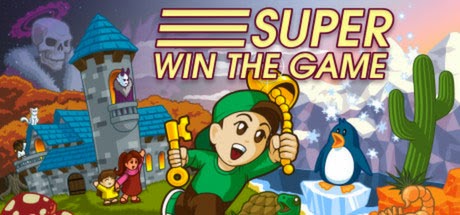
Super Win the Game

A game by Minor Key Games for PC, Mac, and Linux, originally released in 2014.
Super Win the Game is the sequel to the 2012 freeware title, You Have to Win the Game. While the original game hearkened back to the days of 1980’s computer games – complete with limited color CGA and EGA display modes – Super Win the Game offers up an NES-style aesthetic with an expanded color palette, a larger world, and a wider variety of themed locales. The game also features multidirectional scrolling rather than the interconnected single-screen rooms found in the original game.


Rather than presenting a single contiguous world, Super Win the Game offers individual towns and dungeons, with an overworld map to connect them all. Similar to the presentation in Zelda II, the world map is top-down with icons representing town and dungeon locations, and entering these areas reveals sidescrolling platforming environments.


Fenix Rage / Fenix Furia

A game by Green Lava Studios for PC, PS4, and Xbox One, originally released in 2014.
Fenix Rage, a.k.a. Fenix Furia, is a precision platformer that falls into the narrow range of titles considered “rage” platformers, such as Super Meat Boy. Games in this subgenre tend to offer the player fast and responsive controls that must be used with pinpoint timing in order to survive an onslaught of enemies and obstacles with very little room for error. In these kinds of games, players die quickly and frequently, leading to frustration as players repeatedly fail to complete a set of challenges for which they have the requisite tools.


Increasing frustration levels are core to a rage game’s design, as they can lead players to make more mistakes and actually perform worse on future attempts, potentially leading them to “rage quit” and leave the game (often returning later to breeze through a tough challenge with a clear head). This rage-based design is supported by short levels, infinite lives, and instant respawns. Players are free to play and die as often as needed with no additional penalty, and no “game stuff” stands in the way of the experience, like wading through menus or sitting through loading screens before making another attempt.


Magicmaker

A game by Tasty Stewdios for PC, originally released in 2014.
Magicmaker stars an out-of-work wizard who is behind on his rent. To make ends meet, the wizard visits a magical job placement office, which casts a “career placement spell” and sets him up for a job as a security guard at the nearby Dörwall Community College, a wizarding school for the local Dörwallians. After surviving his aptitude test, the wizard assumes the responsibilities of protecting the school and taking on quests to defeat monsters and collect magical artifacts.


The game is a sidescrolling action adventure that sits squarely in the dungeon crawler category. Players enter one of five themed areas, clear the place of monsters, and collect materials along the way that can be used in the game’s extensive spell crafting system. With dozens of materials to find and millions of possible combinations, players are able to mold the wizard’s skills to their liking, experiment with new tactics, or customize the character to complete specific objectives.