Welcome to 8 Bit Horse

8 Bit Horse is a website dedicated exclusively to 2D video games for all systems, old and new.

Lessons in 2D Game Design

We delve into the design lessons learned from classic 2D video games.

Picks of the Decade

Our picks of the most memorable games from the previous decade.

A Celebration of 2D

Our list of notable 2D video games.

Showing posts with label Linux. Show all posts

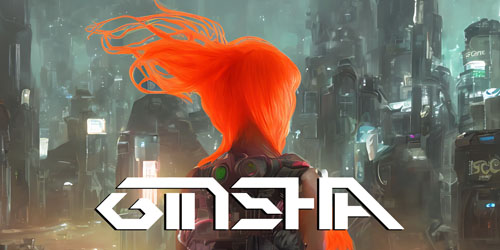
Ginsha

A game by PolarityFlow for PC, Linux, and Switch, originally released in 2023.
Ginsha is an open world action-adventure starring an alien symbiote named Gin who has crash-landed on Earth, along with her companion Gon. Many such symbiotes – from a race of beings known as Ginsha – were drawn to Earth for unknown reasons. Gin and Gon fall into a cloning facility, with Gon landing near some sort of hovering drone, which it takes over. Gin manages to make her way over to the body of a clone and grabs onto it, essentially becoming a head of wild orange hair. Together, Gin and Gon explore multiple planets on a mission to find out what has drawn them here, and what has happened to the Ginsha who came before them.
While Gon is limited to hovering around, Gin has control of an advanced clone that allows her to run, jump, dash, use psionics, and make use of a variety of items and equipment. At the outset, Gin is limited to a 1x nonvariable jump, but she gains a double jump very early into her adventure. She can also perform a dash on the ground or in the air, and generate a psionic shield that protects her from most damage. Both of these skills draw from an energy meter that refills slowly over time.


To a Starling

A game by Peteksi for PC, Mac, and Linux, originally released in 2022.
To a Starling is a puzzle platformer featuring a starling on a quest to collect blueberries. Unfortunately, these berries are located in some pretty hazardous locales that are packed with dangers like spikes, water, and… even more spikes. Snagging berries isn’t easy, but our avian hero has one trick up its feathered sleeve that most birds (presumably) do not: the ability to teleport.
You have only a couple of tools at your disposal: the ability to walk to the left or right, the ability to teleport to certain orbs, and a highly variable jump with lots of midair direction control… which you’ll need to navigate some extremely tight spaces with mere pixels standing between success and bird-kabob. Getting killed or leaving the room resets the current puzzle, and you’ll sometimes need to purposely kill yourself if you put yourself in an unwinnable situation, but puzzle rooms are small so this is a minor inconvenience.


ScourgeBringer

A game by Flying Oak Games and E-Studio for PC, Mac, Linux, Switch, PS4, Xbox One, and Xbox X/S, originally released in 2020.
ScourgeBringer is a hardcore roguelike actioner set in a dark an unforgiving world. Long ago, a gigantic object appeared in the skies, laying waste to cities and civilizations as it travelled across the planet. The people came to call this object the ScourgeBringer. The few remaining survivors have become nomads to stay out of the path of destruction, while other brave souls have ventured inside… never to return. You take on the role of Khyra, a powerful warrior with flaming white hair. She enters the ScourgeBringer to fight her way through, and learn what the people did to deserve this endless reign of destruction.
On a first attempt, players enter a tutorial that explains the basic controls, and then they are dropped into the fray… room after room filled with deadly enemies and traps. Per genre conventions, level layouts are randomized, so every run is somewhat different. However, each themed area contains a specific set of enemies and hazards, so players will know what to expect in any given room. And of course, death returns the player to the start of the game to try again, but there are several persistent upgrades to be unlocked along the way (more on those in a bit).


Mighty Goose

A game by Blastmode for PC, Mac, Linux, Switch, PS5, PS4, and Xbox One, originally released in 2021.
Mighty Goose is a run-and-gun shooter that takes its inspirations from classic arcade games, especially the Metal Slug series, and it's playable via 1P or 2P co-op. You take on the role of the eponymous Mighty Goose, one of the galaxy’s greatest bounty hunters, as he embarks on a mission to defeat the maniacal conqueror known as the Void King. Mighty Goose pilots a giant goose-shaped ship as he travels between planets and installations, all the while accompanied by his radio operator, Chonk, who fills him in on mission intel.
But Chonk isn’t your only support… throughout the game, you encounter various anthropomorphized animals in need of rescue – some of whom are hidden – but once you get them back to your ship, you can call on any one of them to accompany you on your next mission. Each animal companion has different capabilities and will attack enemies with melee weapons or projectiles, and some have secondary support skills, such as a pig named Weaponmaster Vark who occasionally drops machine gun ammo so you can rain hell on your enemies.


Cathedral

A game by Decemberborn Interactive for PC, Mac, Switch, PS4, iOS, and Android, originally released in 2019.
Cathedral is a retro-style metroidvania inspired by the classics of the 8- and 16-bit era. The player takes on the role of an unnamed knight who is suddenly transported from another world in a flash of lightning. With no knowledge of who he is or what he is meant to do, he begins exploring a sprawling cathedral filled with enemies and traps. Early in his adventure, the knight meets a mysterious spirit named Soul who guides him on a quest to collect five elemental orbs and bring them to a mysterious door.
The game takes place across a large environment and several themed regions, with the player facing enemies and solving environmental puzzles along the way… and facing off against the guardians that protect each of the orbs. As you fight and collect treasure, you are able to buy better armor and perks, allowing you to survive tougher encounters, and you learn new abilities that allow you to reach previously inaccessible areas, per genre conventions.


Blasphemous

A game by The Game Kitchen for PC, Mac, Linux, Switch, PS4, and Xbox One, originally released in 2019.
Blasphemous is a brutal melee-based action-platformer with light metroidvania elements, set in an open world filled with nasty creatures and tormented souls. As it says on the tin, the game employs no small amount of blasphemy in its narrative and visuals, opening with a nun pounding her chest with the base of a small statue as she calls out to claim the Grievous Miracle and begs for punishment. Then she rubs her thumb over the statue’s penis, clicking it to reveal a gigantic sword, which she rams into her chest, apparently summoning forth a being known as The Penitent One.
The player takes on the role of The Penitent One, whose first act is to withdraw the thorny blade from the chest of the dead nun, who has now turned to stone. The Grievous Miracle – rendered by a righteous yet pitiless deity whose will is unknowable – spread throughout the land, manifesting the pain of every soul into reality, which was a blessing for some, but a vile punishment for most. Many creatures encountered in the game are burdened by heavy objects that they are cursed to carry as they forever wander, and some NPC’s and bosses are undergoing continuous torture as well.


Alwa's Legacy

A game by Elden Pixels for PC, Mac, Linux, Switch, and PS4, originally released in 2020.
Alwa’s Legacy is the follow-up to Alwa’s Awakening, and both are retro-style open-world metroidvania adventures. In the first game, Zoe is summoned from another world to help save the land of Alwa from the evil Vicar and his four agents. She begins the game passed out and face down outside of a tall structure where she is greeted by an elderly woman named Saga, the one who summoned her. Zoe climbs the tower to retrieve a magical staff, and then sets out on her grand quest. After she defeats the final boss, she enters a chamber and walks up to an altar. A light comes down from above and envelops her, knocking her unconscious. While passed out, she appears to grow in age, and she is returned to the entrance of the tower where Saga once again greets her and tells her about her quest.
Alwa’s Legacy begins with Saga walking through a grand library and picking up a large book. She speaks to a man, saying “Yes, she’s about to wake up. I want her to have it as soon as she’s here,” and then she follows this statement with a more mysterious one: “This time around, let’s hope she makes the right choices.” Zoe is, of course, lying unconscious outside the tower, just as she was at the end of the previous game, only now she is somewhat older. She has lost her memory once more, and the only thing she can recall is standing in front of an altar and a light coming down from above. The opening sequence seems to suggest that Zoe somehow failed her prior mission and that she is cursed to repeat it until she gets it right.


Carrion

A game by Phobia Game Studio for PC, Mac, Linux, Switch, Xbox One, and PS4, originally released in 2020.
Carrion is a grotesque horror actioner that sees you taking on the role of an amorphous tentacled monstrosity that’s killing everyone, rather than a hero who must save the day. The creature is a gibbous mass of eyes and mouths and tentacles that can grow from a couple of feet in diameter to an uncomfortable room-filling thing that would make MacReady think twice about lighting his flamethrower.


The creature has managed to escape the confines of its specimen container, sending biosuit-wearing scientists running for the nearest exit as the twitching fleshy organism slinks and slithers across the floor, up the wall, and across the ceiling. Alarms sound and red lights warn of the breach as panic sets in, and for good reason… once you get within striking distance of a tender lab technician, it’s feeding time. You use your tentacles to tear people in half, or just drag them screaming into one of your waiting mouths to devour them, regaining health and growing larger in the process.


You are able to stick to any surface and slink through open rooms and narrow passages with ease, as the game’s procedural animation takes care of sending out tentacles to pull you forward, while you simply concern yourself with the direction of travel. Movement gets somewhat more complex as you grow larger and have to worry about extra parts of your body hanging off ledges and being exposed, and your largest form has a less well-defined center, making movement slightly more cumbersome… which is part of the gameplay design. The smaller you are, the more precise your movements, but growing larger grants you more health and new abilities.


Of course, the game would hardly be worth playing if you couldn’t directly control some of the tentacles. You are able to manually reach out to grab people, flip switches, open doors, tear open vents, break through obstructions, open electrical panels, and occasionally grab hovering drones out of the air to repeatedly slam them against the wall until their humming winds down to silence. Throughout the game, you’ll find specimen containers that may be broken open, granting abilities that give you new environmental exploration and combat options, allowing you to slowly reach new areas and more thoroughly explore previous locales.


Size is a key factor in how you are able to interact with the environment. You start out as a medium-sized creature… larger than a human but still reasonably able to enter any space that a human could. At certain key points in the game, you gain the ability to increase your total size by two additional levels, resulting in a large creature that can stretch to perhaps 25 feet in length, followed by an extra-large size creature that can fill a small room or stretch the length of the screen.


There are four action buttons, each of which is displayed in a corner of the screen. One button causes the creature to roar, which allows for echolocation to give the player an idea where the nearest save point is, since there is no map. In a nice touch, the roar can also strike fear into people, with scientists screaming in fear and running away, and soldiers backing away slowly with their guns drawn. The other three buttons are locked to start, and their functions change based on whether the creature is medium-sized, large, or extra-large.


The first new skill you gain is the ability to shoot a cobweb-like arm through narrow openings that are too small for you to pass through, allowing you to pull switches and stun enemies. This ability can only be used by the medium-sized creature.


Later, the player earns the ability to smash through wooden objects and slash enemies, but this can only be done in the large form, and this replaces the cobweb arm ability. As a result, the player may need to consume humans to grow larger and gain the smashing ability, or find reddish pools that allow him to temporarily deposit some of his biomass – thus reducing his overall size – and allowing him to use the cobweb arm ability.


Throughout the game, you are faced with environmental puzzles that require you to consider the abilities that are associated with each of the three possible creature sizes. Abilities allow you to bypass laser tripwires, pass through small underwater openings, and overcome stronger obstacles, and some of these abilities draw from a secondary meter that is refilled by zapping yourself on electrical panels.


Perhaps the most interesting ability is parasitism, which allows you to temporarily take control of a human host… When using parasitism, you extend a tentacle outward from your body, and it can travel a much greater distance than your standard tentacles, but it cannot interact with anything besides humans. Part of the challenge here is navigating tight spaces with a slightly-too-fast tentacle without running into obstacles or being detected by enemies that can fight back. Once the tentacle makes a connection – with a living host or a dead one – the human slowly rises to his feet and you assume direct control.


Usually, you’ll use these sapient meat sacks to flip switches that you can’t reach, but sometimes you’ll use their weapons to murder their unsuspecting comrades before relinquishing control and leaving their husks behind. There are also several interstitial scenes where you take control of a human as he explores an underground installation, although it’s unclear when these scenes take place in relation to the current events.


There isn’t much of a narrative other than your presumed desire to escape the massive underground complex. Your movement is quite restricted at first, but each new ability allows you to branch out a bit more. The lack of any kind of map makes it difficult to understand how the structure is laid out, what your intended end point is, and whether you’re making any progress toward it. This can also make exploration challenging as more of the world opens up, because it becomes more difficult to remember where you might need to go to make your way to the next challenge. That said, the game frequently locks the player off in a given area, thus communicating that the player must overcome a self-contained set of challenges before moving forward.


Throughout the game world are numerous doorways that remain locked until the player finds special cracks in the walls (called “hive crevices”). Entering each of these results in a short scene that shows the biomass expanding outward and corrupting a small area around it, followed by a close-up shot of the exit door with red masses growing over it. Each door has a certain number of panels on it, indicating the number of crevices the player must enter to open the passageway. Each passageway also contains a sign showing the player’s completion percentage and whether or not the area’s containment unit has been breached, which indicates whether the player has located the new ability (or energy meter extension) in each area.


Players have infinite attempts to complete the game, and they are generally free to return to save points to restore lost biomass, although there are numerous 1-way tubes that temporarily prevent backtracking. At first, the save points appear to offer a narrative explanation as to how you can come back to life after being killed, since you’ve essentially left some of your biomass behind, but returning to the most recent save retains no continuity… You’ll still need to kill the same bad guys and overcome the same obstacles, so it’s really just a regular save point like any other game.


The game is fairly generous with health. The player begins the game with a 5-unit health meter, and each new size threshold increases this by another five, eventually allowing for 15 units of health. Health is divided into three sections, each corresponding to one of the creature’s size thresholds, and losing enough health drops the creature down to the next smaller size. Humans are common enemies, with some carrying handguns, some carrying machineguns, and others carrying flamethrowers. But killing and eating humans restores some of your health, so the key to staying alive often means killing everyone in your path and taking care to eat the corpses afterward... or you can eat them alive so you can hear the screams. Many areas also have unarmed scientists that are free to enjoy for your snacking pleasure.


Enemies with handguns aren’t terribly dangerous on their own, but they can drain your health quickly if there are several in a room. Fortunately, they have no other defenses, so rushing is a reasonable tactic to eliminate them before they cause too much damage. Guys with machineguns can be quite tough, as they deal damage quickly and can put up electrical shields that prevent you from attacking from the front. Fortunately, many rooms feature ventilation shafts and other passages that allow you to slink through and get behind your targets. Flamethrower guys can be especially dangerous (but the flames are quite pretty!), as they not only cause a lot of damage but also set the creature on fire, so it’s best to deal with them quickly or sneak up on them... and if you do find yourself immolated, you can dive into a pool of water to put yourself out quickly.


There are a few other dangers to deal with, such as hovering drones, turrets, and explosives, but one of the more complex enemies comes in the form of a mech suit. These mech suits can deal a tremendous amount of damage in a short span, making them impossible to deal with head-on. Instead, you must move in quickly or come from around a corner, and then grab the mech with your tentacles and retract quickly. Doing so yanks off a chunk of the mech’s outer protection, and once you’ve pulled off enough pieces, you can grab the pilot right out of the thing and eat him. Using parasitism, you can also command a human to enter a mech suit and unleash a heavy spray of bullet butter on everything around you.


Aesthetically, the game is built around selling the reverse-horror aspect where you are in control of a terrifying creature. The procedural animation of the tentacles, along with the mass of eyes and mouths, really emphasizes that this is some unknowable and unstoppable killing machine that could threaten the entire planet should it escape the complex. The atmosphere builds upon this with an ambient horror score and lovely lighting effects – and even some breakable light sources – along with whimpers of panic and screams of fear and pain as you come rolling into a room smashing and devouring everyone in sight. There’s plenty of opportunity for players to forego a direct assault in favor of more of a lurking horror approach, as they slide around the outside of a room and then grab people through the vents to kill them or take over their minds.


Even a small amount of imprecision in the controls – which becomes more pronounced as you grow larger – helps you to feel that you are inhabiting this grotesque monster. Sometimes you may find yourself surprised when a tentacle reaches out from a part of your body that you weren’t expecting, or when you suddenly send out a half dozen tentacles to secure yourself as you glide effortlessly (yet grossly) across a room. Oh, and the sound effects for the tentacles making contact with surfaces is spot on… someone definitely watched a few horror movies to get the sound design right on this.


2D CRED
Carrion was developed by Phobia Game Studio, based in Poland. The studio is headed by Sebastian Krośkiewicz, who previously worked on Butcher, and he is credited with game design, art, and programming. Krzysztof Chomicki is credited with game design and level design. Music for the game was directed and composed by Cris Velasco (who has composed for numerous AAA games, including entries in the Resident Evil, Darksiders, Mass Effect, and God of War series, among many others), with music and sound design by Maciej Niedzielski, and additional sound design by Joonas Turner (Downwell, Environmental Station Alpha, Nuclear Throne, ScourgeBringer, Noita).

The game was published by Devolver Digital, which has published a number of 2D indie games including Serious Sam: Double D XXL, Luftrausers, Broforce, Foul Play, Fork Parker's Holiday Profit Hike, Hotline Miami, Hotline Miami 2, Titan Souls, Not a Hero, Ronin, Downwell, Enter the Gungeon, Mother Russia Bleeds, Serious Sam’s Bogus Detour, Minit, The Swords of Ditto, The Messenger, Crossing Souls, Gato Roboto, and Katana ZERO, GRIS, and Witcheye.


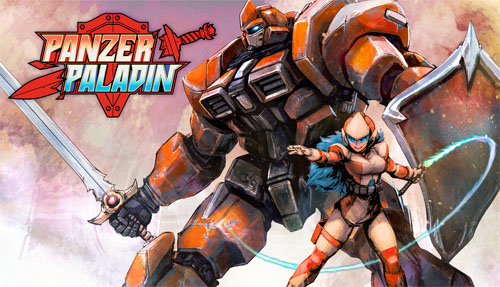
Panzer Paladin

A game by Tribute Games for PC, Linux, Switch, PS4, and Xbox One, originally released in 2020.
Panzer Paladin is an action platformer set in a world that is under siege by the occult forces of Ravenous, who has sent 10 weapon-shaped meteors hurtling toward Earth, each landing in a different country. Using these weapons as portals, hordes of demons pour forth, threatening all of mankind as the world’s armed forces fall before their might. Fortunately, a plucky android named Flame offers to step in and save the day, despite the fact that she was not built for war… but no matter, because she is able to pilot a hulking suit of robotic power armor called Grit.


The game is modeled after 8-bit classics with numerous gameplay styles on offer, mixing mech combat with platforming, grappling, and the ability to hop in and out of the mech as the situation demands. The level structure is set up like the Mega Man X series, with a single level that the player must complete at the start, which doubles as a tutorial, followed by 10 levels that may be played in any order. Once all of these levels have been completed, the player gains access to the final gauntlet of six tougher levels that must be played in sequence.


All of Grit’s combat techniques are built around melee strikes, and while the mech suit is capable of punching, most of the game is spent wielding various sorts of weapons. Grit can attack to the left or right while standing, ducking, or jumping, with downward strikes possible while jumping, and upward strikes possible while standing or jumping. Attacking upward while jumping also gives Grit a bit of extra height to his 1.5x variable jump, and striking an enemy below causes a short hop, allowing him to bounce from one enemy to the next.


Grit can also perform a backstep to avoid attacks and has a shield that can block high or low projectiles as long as he is not attacking or jumping. Blocking just as an enemy strikes can temporarily stun them, allowing Grit to get in some free hits, even against enemies carrying shields. Otherwise, when fighting shielded enemies, players must alternate between high and low attacks in order to find an opening and cause damage.


With a button press, Flame can hop out of the mech and run around the environment. Her maximum jump height is the same as Grit’s, but she is somewhat less capable in combat. She is able to swing a whip to the left or right while standing or jumping, which has a longer range than Grit's attacks, but she cannot attack upwards or downwards and she cannot make use of any other weapons. She can also use her whip to latch onto grapple points and swing herself through the air, often over bottomless pits with multiple grapples required in succession.


Leaving the mech is optional for most of the game, but there are short areas in most levels where the player encounters passages that are too small for Grit to enter. Here, the player must hop out and complete a short platforming and/or grapple sequence, at the end of which is a teleporter that allows the player to summon Grit to his position. A few areas have alternate routes that allow the player to make progress through the level using Flame instead of Grit, which may allow the player to avoid some enemies and obstacles. Also, each level contains side paths for Flame – often hidden behind destructible walls – that lead to 1UPs or energy tanks that restore Grit’s health meter. In a nice touch, 1UP icons are specific to each geographical area, so for instance, the 1UP icon in Egypt is a scarab beetle.


Grit and Flame have separate health meters, and Grit is able to sustain quite a lot of damage, whereas Flame falls with just a few hits, and her health is not restored by re-entering the mech, as is the case in most other games with this mechanic. Each level contains a single energy tank to restore a small amount of Grit’s health meter, and there are some restorative canisters for Flame, but these are harder to find. The player begins the game with three lives, and losing them all returns him to the start of the level (with three lives restored), but he has infinite continues. Losing a single life returns the player to the most recent checkpoint… but there is a significant distance between them (there are only two per level), which can result in a lot of repeated play. Further complicating matters are numerous traps such as water and bottomless pits that will kill the player instantly.


The player is able to select between Easy, Normal, and Hard modes from the start and can change the difficulty level at any time during the game. It’s worth noting that the player is able to visit most levels in any order (and replay them). As a result, the difficulty curve remains relatively flat throughout most of the experience, but the difficulty level increases for the final six levels, offering tougher environmental challenges and more complex boss encounters. The game also features a speedrun mode, as well as a mode where you can design your own custom weapons, and a unique take on the boss rush formula via Tournament mode, which is locked to start. There’s also a remixed Classic mode that unlocks when the player completes the game, offering an additional challenge.


The primary aspect that sets this game apart from other genre entries is its weapons system. Throughout the game, you will encounter dozens of different melee weapon types, each of which may be added to your inventory to be used right away or held for later. Some weapons are simple swords of varying lengths and damage output, but there are also spears, hammers, staffs, and even some really odd weapons like a dead cat on a stick or a keytar. In addition, every boss you defeat grants a unique weapon that is more powerful than those you’ll find during regular play.


You can have four active weapons in his inventory at any given time and cycle through them with a button press. With fewer than four weapons equipped, any weapon recovered from a downed enemy or hidden behind breakable blocks will be immediately added to your cache of usable weapons. Anything beyond four is dropped into to your inventory, and you may equip these weapons from the pause menu. Every weapon has a different range, attack power, and durability.


Every time a weapon makes contact with an enemy or destructible object, it loses some durability, until it is eventually destroyed. While this kind of weapon system generally slows the pace of straightforward action games, here it is part of the overarching strategy. First of all, in order to activate a checkpoint, you need to give up one of your weapons. You get loads of them, so you’re not likely to put yourself at a disadvantage, but you can take the risk and skip a checkpoint if you want to hold onto your inventory. Generally, you’ll just equip the weapon with the least amount of durability, slam it down into the checkpoint, and move on… but there’s another use for weapons: magic spells.


Every weapon you encounter has a spell associated with it, and at any point you can choose to destroy an equipped weapon to unleash its spell. Spells come in several varieties, offering increased attack power, increased defense, or increased durability for your next equipped weapon (these effects are stackable), as well as small, medium, and large health restoration. There’s even a spell that temporarily grants the player wings, allowing him to bypass most environmental obstacles and enemies.


Offensive spells include lightning strikes and the ability to absorb HP from your enemies to restore a small amount to your mech. There’s even a blessing spell that grants slow health restoration over time, and this can be used to counteract being cursed (which slowly drains health). It takes a few seconds to break a weapon, so it can be risky to try during combat, but keeping an extra baseball bat on hand with a large health restoration spell can save you in a pinch.


Things start with a bang as a cool anime-style intro introduces the characters. Then you drop down into a level set in Canada where you learn the basic mechanics and encounter loads of different weapon types right out of the gate. You also learn that you can throw weapons across the screen to hit distant foes, although doing so causes you to lose the thrown weapon (you can pick it back up if you miss your target). Early on, it’s best to hold onto as many extra weapons as possible, because you have the option to melt down excess weapons between levels for small permanent health upgrades.


While you’re free to exit the mech and run around as you like – there’s a teleporter before each checkpoint so you won’t ever be stuck – the mech’s increased defense makes it safer to stay inside. Plus, you can’t pick up any of the cool weapons while playing as Flame… but in a nice touch, if the mech is destroyed, Flame automatically hops out to begin fighting on her own. Most Flame-specific challenges are very short, but there is one level late in the game where the player must rely almost entirely on Flame to navigate the area. Thoroughly exploring levels occasionally results in finding a durability powerup, which affects the current equipped weapon, and there are also powerful weapons tucked behind blocks that must be destroyed with certain weapon types – cutting, piercing, or impact – but given the abundance of weapons, you’ll almost always have something on hand to break it.


The player encounters many of the common enemy and weapon types throughout much of the game, which can make some of the action repetitive, but things are changed up from time to time with more powerful foes or tougher environmental challenges. Players will encounter exploding platforms, rolling rocks and cannon balls, conveyor belts, lasers that can be blocked with moving platforms, a moving train, and even the requisite mine cart and elevator sequences (both in the same level!), along with the traditional platforms that drop out, fall, or move back and forth.


The methods required for defeating enemies are generally clear based on their designs, with some impervious to attack from a certain direction and others using shields or other objects to block your attacks. Bosses offer somewhat more complex behaviors as well as some subversions to the established mechanics. For instance, when fighting Medusa, she is able to temporarily turn Grit to stone, requiring that you hop out and attack as Flame if you don’t want to remain stuck in place. Anubis has a powerful attack that can actually knock you out of the mech, but there are grapple points along the top of the arena so you can get back over to the mech while avoiding attacks.


However, some bosses are quite easy, even on a first playthrough, and particularly if you’ve cast attack or defense spells beforehand. Since most regular enemies fall with one or two hits from any weapon, it’s best to save boss weapons to fight other bosses, and doing so allows you to cause quite a bit of damage, to the point where it’s possible to stand still and just hammer the ATTACK button while absorbing any incoming damage. Of course, this won’t work for every encounter, and you’ll need to improve your combat skills by the time you face the bosses in the final six levels.


You’ll also fight a mysterious horseman several times throughout the game (every other level or so), and he’s introduced with a short musical theme. The horseman is a bit challenging the first time you face him, but he doesn’t change up his tactics, making him easy to defeat on subsequent encounters, and doing so grants a unique weapon each time. As you might expect, he eventually plays a role in the story.


Aesthetically, the game is done up in an 8-bit style with a bright and colorful palette, and a constantly upbeat soundtrack. Since each level takes place in a different country, there are lots of visual themes. That said, some of the backgrounds are overly busy with little to no negative space, which gives areas a somewhat crowded feel compared to the classics of the 8-bit generation. Character designs are cool, with badass player characters, stylish enemies, and wicked boss creatures. The game also features some nice cutscenes after every few levels, offering a bit more to the story and adding to the generally lighthearted atmosphere, and there’s an exciting introductory sequence as Flame and Grit are dropped into each new area.


2D CRED
Panzer Paladin was developed by Tribute Games, a studio based in Montreal, Quebec. The studio previously developed Ninja Senki DX, a Gameboy Color-style ninja actioner; Wizorb, a game that crosses the block breaking of Arkanoid with RPG elements; Mercenary Kings, a Metal Slug-inspired run-and-gun actioner with RPG stats and a crafting system; Curses ‘n Chaos, a colorful single-screen brawler; and Flinthook, a procedurally-generated grapple-based platformer.


CrossCode

A game by Radical Fish Games for PC, Mac, Linux, PS4, Switch, and Xbox One, originally released in 2018.
CrossCode is a retro-style action-RPG inspired by the classics of the 16-bit generation, particularly those released for the Super Nintendo, a system famed for its library of charming and colorful RPG’s. You take on the role of Lea, who falls into the “silent amnesiac protagonist” archetype, but not in quite the way you’d expect. Lea is a player in an MMO called CrossWorlds, where the action happens in a real place that is populated by real people, along with limited-AI beings and other connected players. CrossCode is set at some undetermined point in the future where MMO's may be played in a way that simulates all five senses, and CrossWorlds takes pace on a distant Earthlike moon that is in orbit around a gas giant.


Lea wakes up in a room with no idea what's going on, and someone is communicating with her remotely. Apparently, Lea played CrossWorlds previously and somehow lost her memory, and her new friends are trying to help her regain her memory by revisiting the game's story and locales. In addition, Lea's speech synchronization system is not functioning, preventing her speaking. Little by little, she gains the ability to say a few words, including her name, “hi” and “bye”, and a few words that allow her to make inquiries, but this technological disability renders her largely silent as she relies on pantomime or one of her talkative companions to speak on her behalf.